Minneriya sits in Sri Lanka’s dry zone, which gets most of its rain from the north-east monsoon (roughly October to January) and stays largely dry through the south-west monsoon (about May to September), when the rain falls on the other side of the island. That rhythm is what creates The Gathering.
How The Gathering works
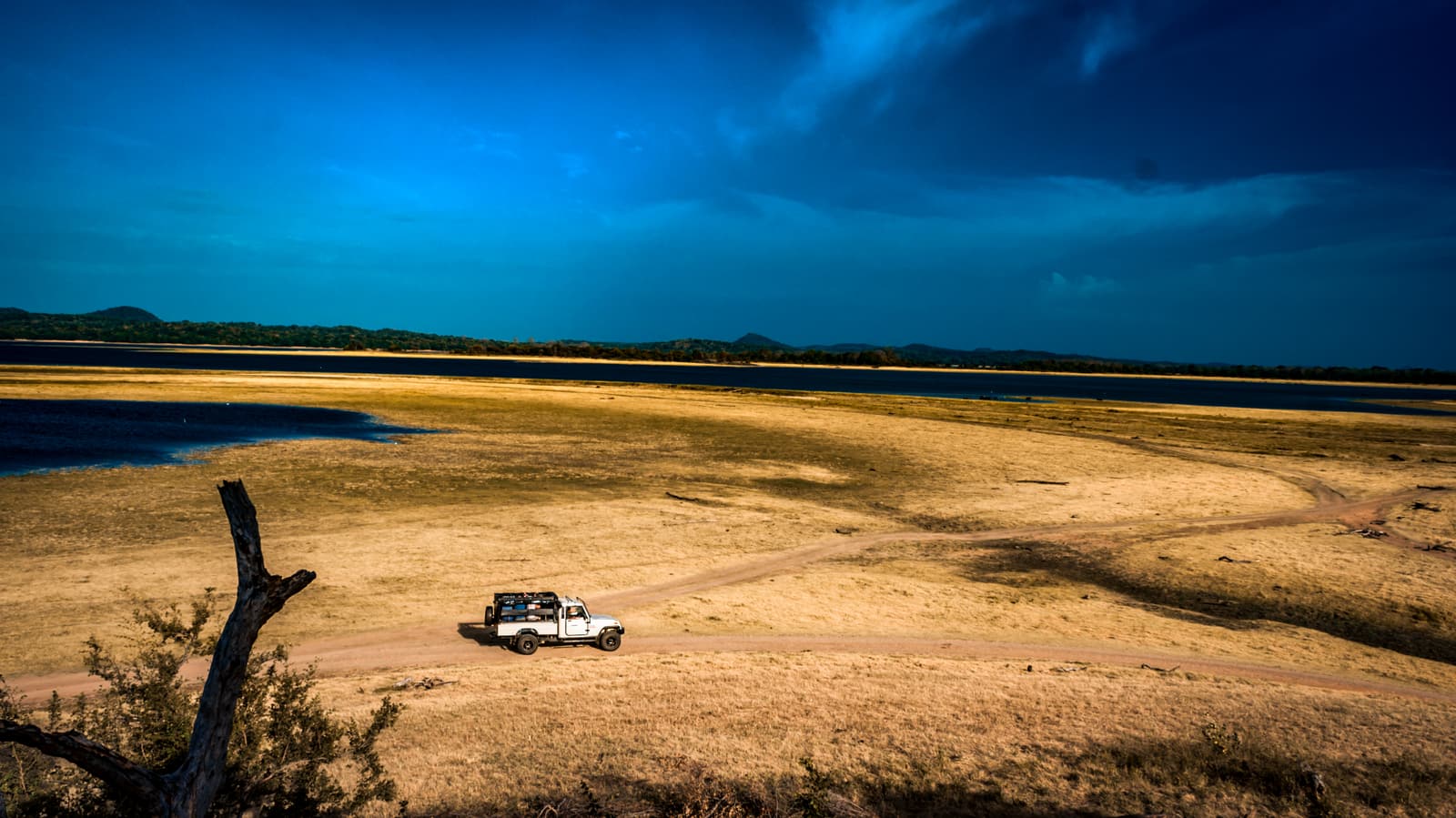
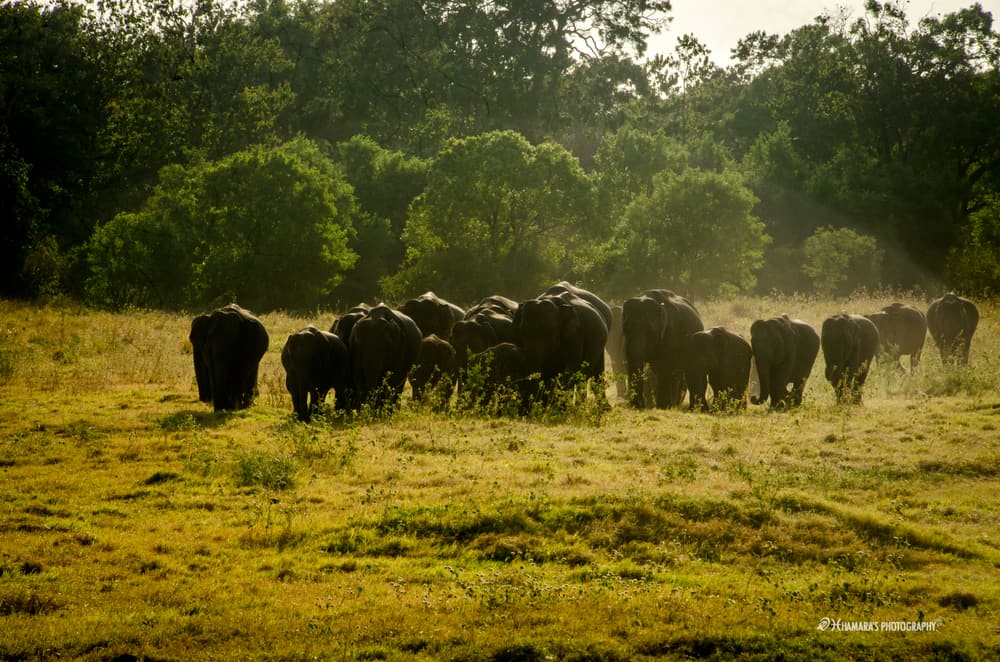
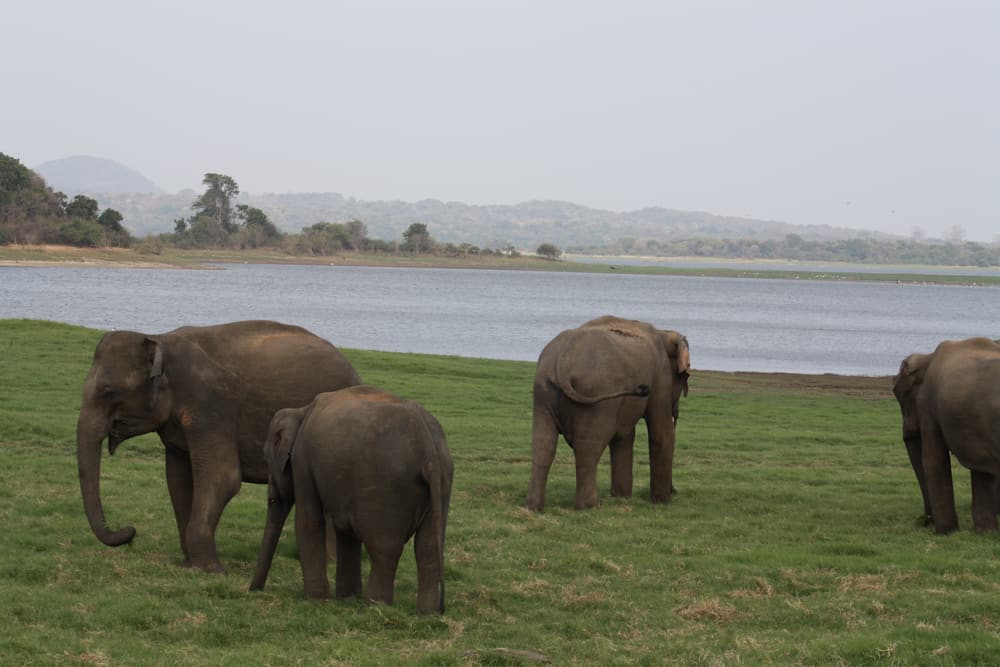
After the rains, the Minneriya tank is full and the surrounding forest has plenty of water and fodder, so elephants are spread out. As the dry season goes on, water holes in the jungle dry up and the tank slowly shrinks. Its retreating edge exposes a wide belt of fertile lakebed, which quickly turns into fresh green grass — and elephants from the whole region, including herds that walk in from forests further away, converge on it. By the height of the dry season, dozens of family groups may be grazing, bathing and socialising on the shore at the same time. Estimates vary from around 150–300 on a typical good day to several hundred at the very peak.
Month by month
| Months | Weather | Elephants | Best park |
|---|---|---|---|
| January – February | Rains easing, green | Scattered; good sightings possible | Hurulu Eco Park, Kaudulla |
| March – April | Hot, mostly dry | Herds start moving towards water | Hurulu / Minneriya |
| May – June | Hot, dry and windy | Numbers at Minneriya building | Minneriya |
| July – August | Dry, very hot days | The Gathering — often excellent | Minneriya |
| September – October | Dry; first storms in late October | Peak, then herds shift north | Minneriya → Kaudulla |
| November – December | North-east monsoon rains | Herds spread out, tank refills | Kaudulla, Hurulu Eco Park |
The dry season in detail (May – October)
This is the classic time for Minneriya. Days are hot and dusty, skies are mostly clear, and each week the water line moves further out. From July onward the grassland is at its best, and in a good year August and September afternoons can bring some of the largest concentrations of Asian elephants anywhere. It is also the busiest time in the park, so an afternoon private jeep and a calm driver make a real difference. As water becomes scarce late in the season, many herds move north towards the Kaudulla tank, so from around September your driver may prefer Kaudulla.
The wet season (November – February)
The north-east monsoon brings heavy afternoon and night rain to the dry zone. The tank fills, the landscape turns vivid green and elephants spread out through the forest. Safaris still run and sightings are common, but groups are smaller. Hurulu Eco Park, with its forest tracks and water holes, is often the best choice now; Kaudulla can be excellent too. It is also a lovely time for birds, when migrants arrive from the north.
The shoulder months (March – April)
Hot and dry, with occasional inter-monsoon storms. The herds begin to drift back towards the big tanks. April brings the Sinhala and Tamil New Year, when many Sri Lankans travel and parks can be busy on the holidays.
Crowds and holidays
- The international high season for Sri Lanka runs December–April, but at Minneriya the busiest months are August and September, when The Gathering and European summer holidays coincide.
- Weekends and public holidays — including the monthly Poya full-moon days — bring more local visitors.
- For a quieter experience, try a weekday, a morning safari, or Kaudulla instead of Minneriya.
Combining Minneriya with the rest of Sri Lanka
Because the dry zone is dry when the south-west coast is wet, the Gathering season pairs perfectly with the east coast — Trincomalee, Nilaveli, Pasikudah and Arugam Bay — which are at their best from about May to September. In the northern winter, combine a greener Cultural Triangle with the beaches of the south and west.
Ready to book? Compare the best Minneriya safaris or read which park when.