Around Habarana, three protected areas lie within half an hour of each other: Minneriya National Park, Kaudulla National Park and Hurulu Eco Park. They are linked by forest corridors, and the same elephants move between them through the year, following water and fresh grass. That is why so many safaris are sold as “Minneriya / Kaudulla / Eco Park” — the best park changes with the season, and sometimes from one week to the next.
At a glance
| Minneriya | Kaudulla | Hurulu Eco Park | |
|---|---|---|---|
| Best months | ≈ Jun/Jul – Sep/Oct | ≈ Aug/Sep – Dec | ≈ Nov – Apr (all year) |
| Landscape | Huge open lakebed grassland | Tank, grassland and scrub | Forest tracks and water holes |
| Main draw | The Gathering — big herds | Herds after they leave Minneriya | Year-round sightings, quiet |
| Crowds | Busy in peak season | Moderate | Usually quiet |
| From Habarana | ≈15 min | ≈30 min | ≈15–20 min |
| Status | National park (1997) | National park (2002) | Eco park in a UNESCO biosphere reserve |
Minneriya National Park — the headline act
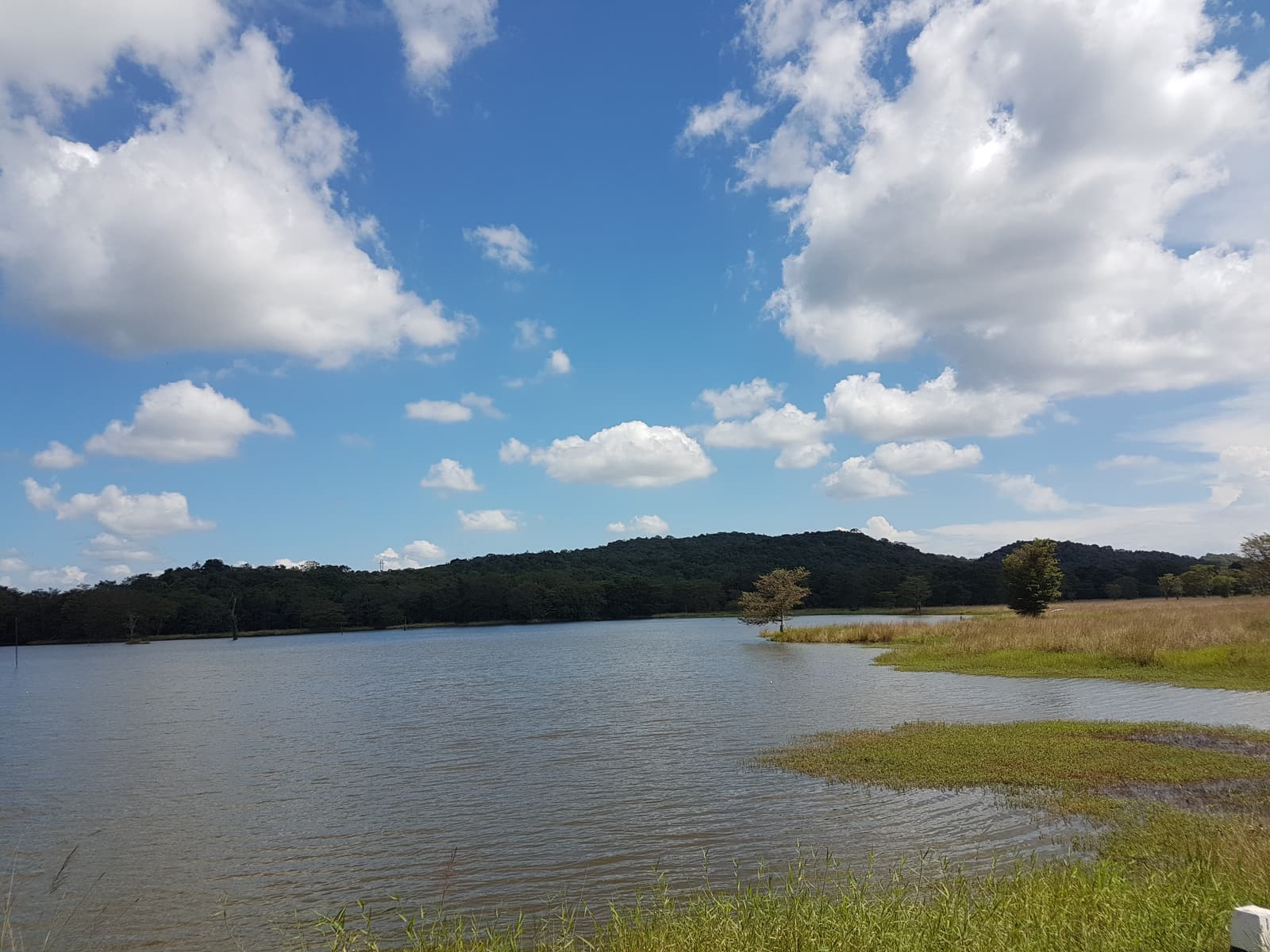
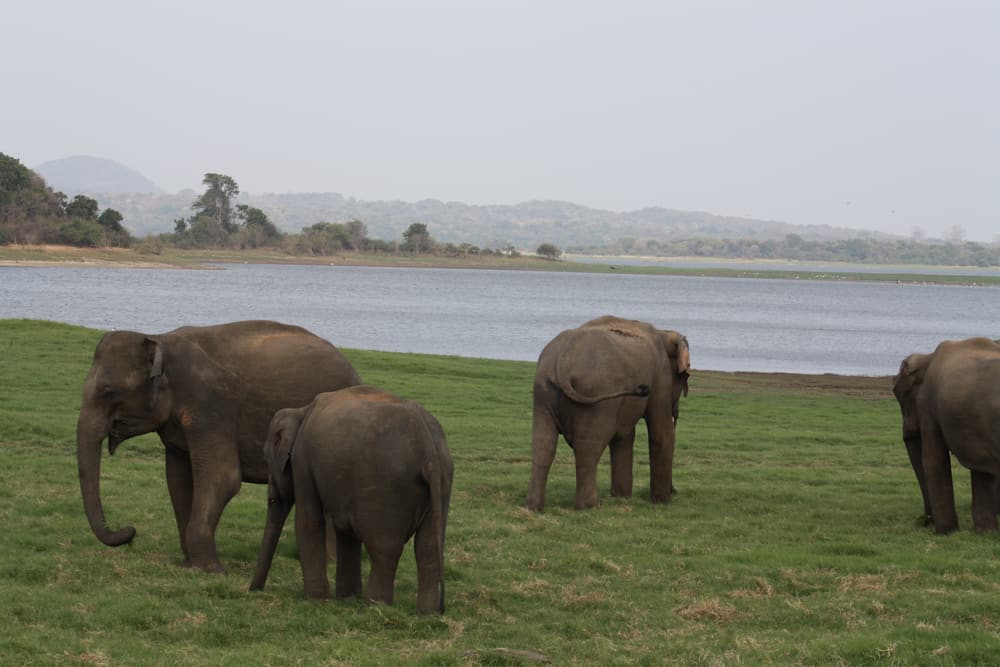
Minneriya is the largest and most famous of the three, built around the 3rd-century reservoir of King Mahasena. Its great strength is scale: when the water retreats in the dry season, the exposed lakebed becomes a vast open meadow where you can see dozens of elephants at once, with the tank and distant hills behind. At the peak of The Gathering there is nowhere better. The trade-off is popularity — in August and September expect many jeeps, particularly in the afternoon. Read the full Minneriya guide.
Kaudulla National Park — the late-season alternative
Kaudulla lies north of Minneriya, off the Habarana–Trincomalee road, around its own ancient tank, also attributed to King Mahasena. It became a national park in 2002, partly to protect the corridor elephants use between Minneriya and the forests further north. As Minneriya dries out, many herds move here, so from about September to December Kaudulla can have the bigger concentrations. It feels wilder and less crowded than Minneriya, and it is a good place to see elephants bathing and swimming. Read the Kaudulla guide.
Hurulu Eco Park — the all-year backup
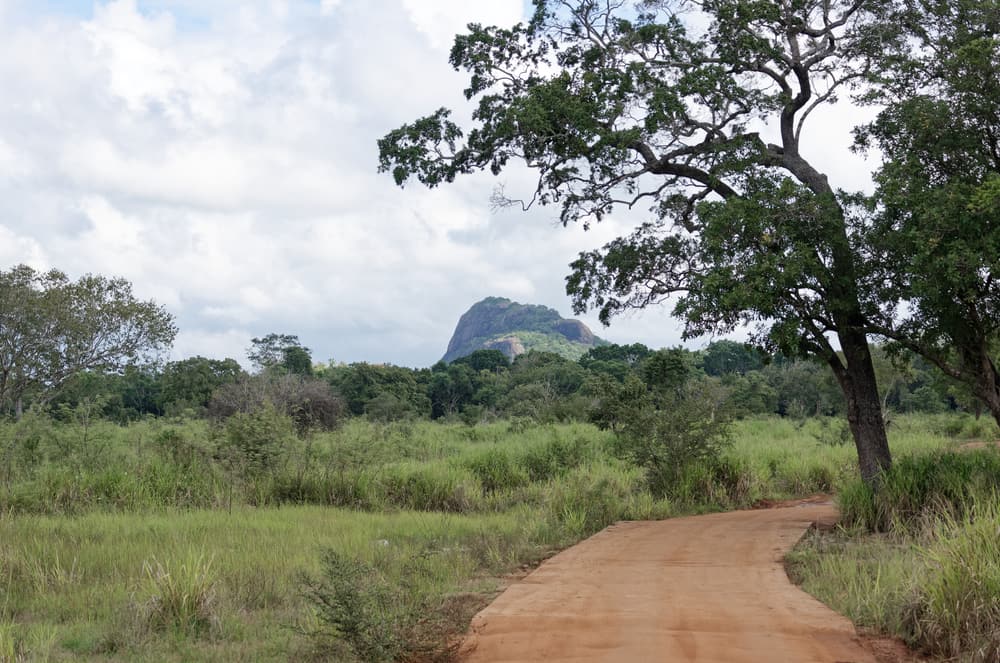
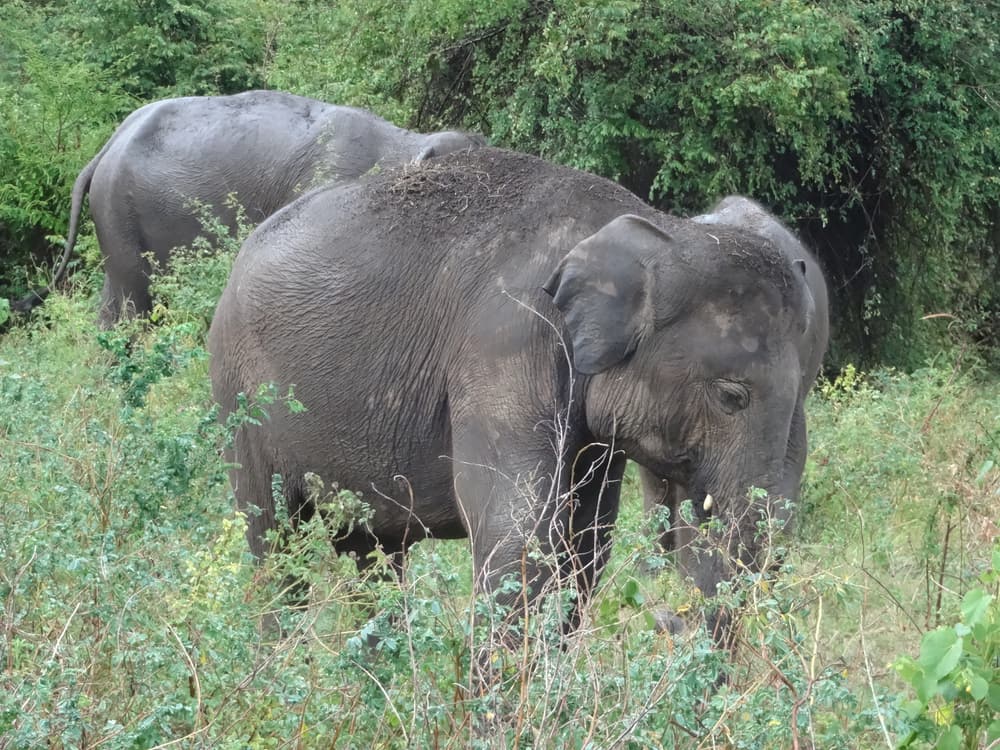
Hurulu Eco Park is a managed section of the Hurulu Forest Reserve, part of a UNESCO biosphere reserve north of Habarana. The landscape is denser — forest, scrub and water holes rather than an open lakebed — so sightings are closer and more intimate but less panoramic. It comes into its own in the wetter months when elephants disperse into the forest, and it is usually the quietest of the three. Read the Hurulu guide.
Can I visit more than one?
Yes, and if you have two afternoons it is the best way to do it: the parks feel different, and the chance that at least one is excellent is very high. Most visitors do one afternoon safari per day; you are unlikely to fit two parks into a single session.
What about Wasgamuwa, Yala and Udawalawe?
- Wasgamuwa, to the south-east, is wilder and much less visited, with elephants and a chance of sloth bears — but it is further to reach.
- Yala, in the south-east, is the place for leopards; elephants are common but not in Gathering numbers.
- Udawalawe, in the south, has reliable elephant sightings all year and suits a trip along the south coast.
For elephants in the Cultural Triangle, though, the Minneriya–Kaudulla–Hurulu trio is hard to beat. Compare the best safaris for each park.